Yang Yang Solo Exhibition
The Weathered One
Nov 13, 2025 - Dec 30, 2025 · C-L251, 99 Ji’an Road, 2nd Floor, Huangpu District, Shanghai
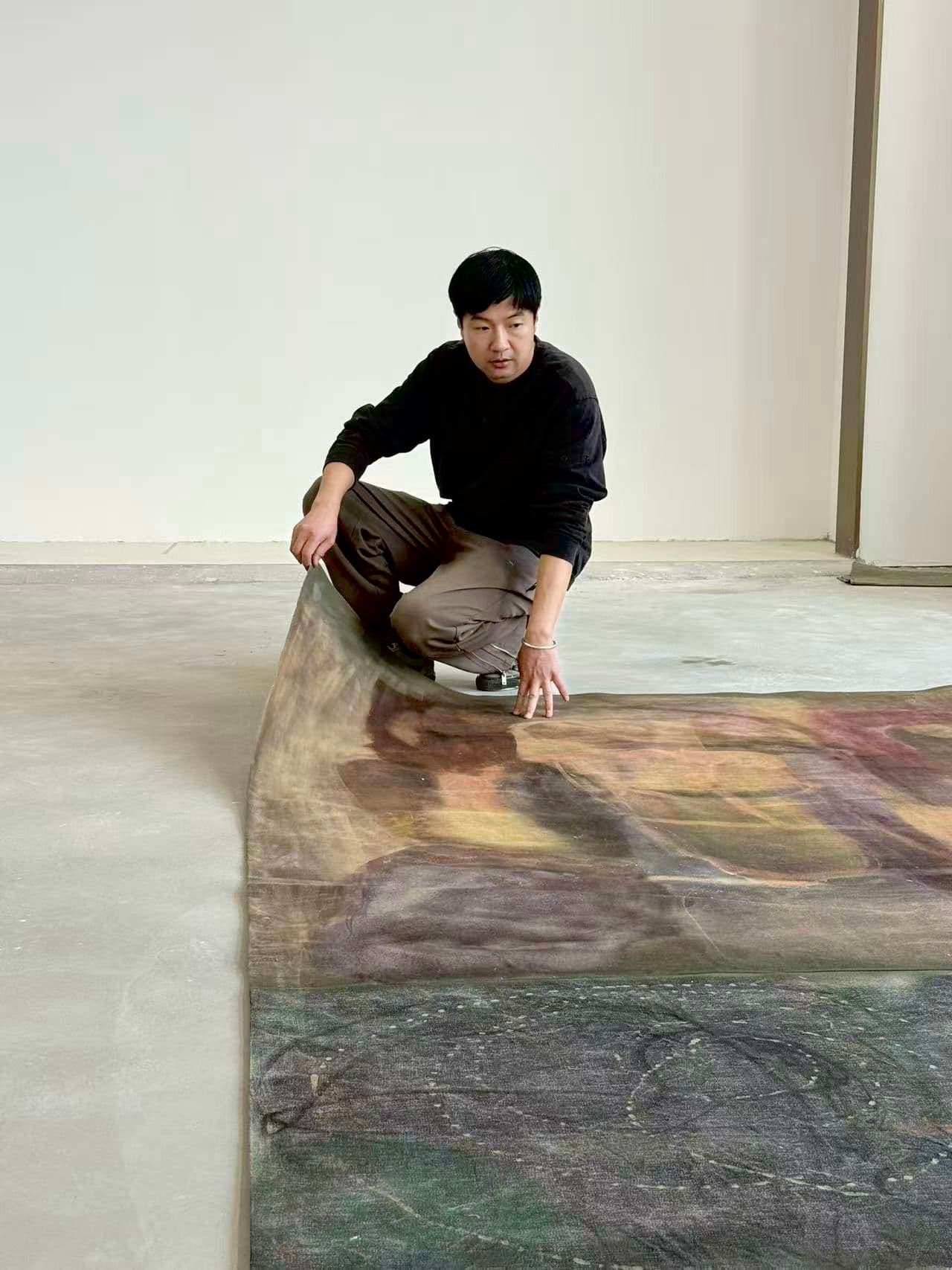
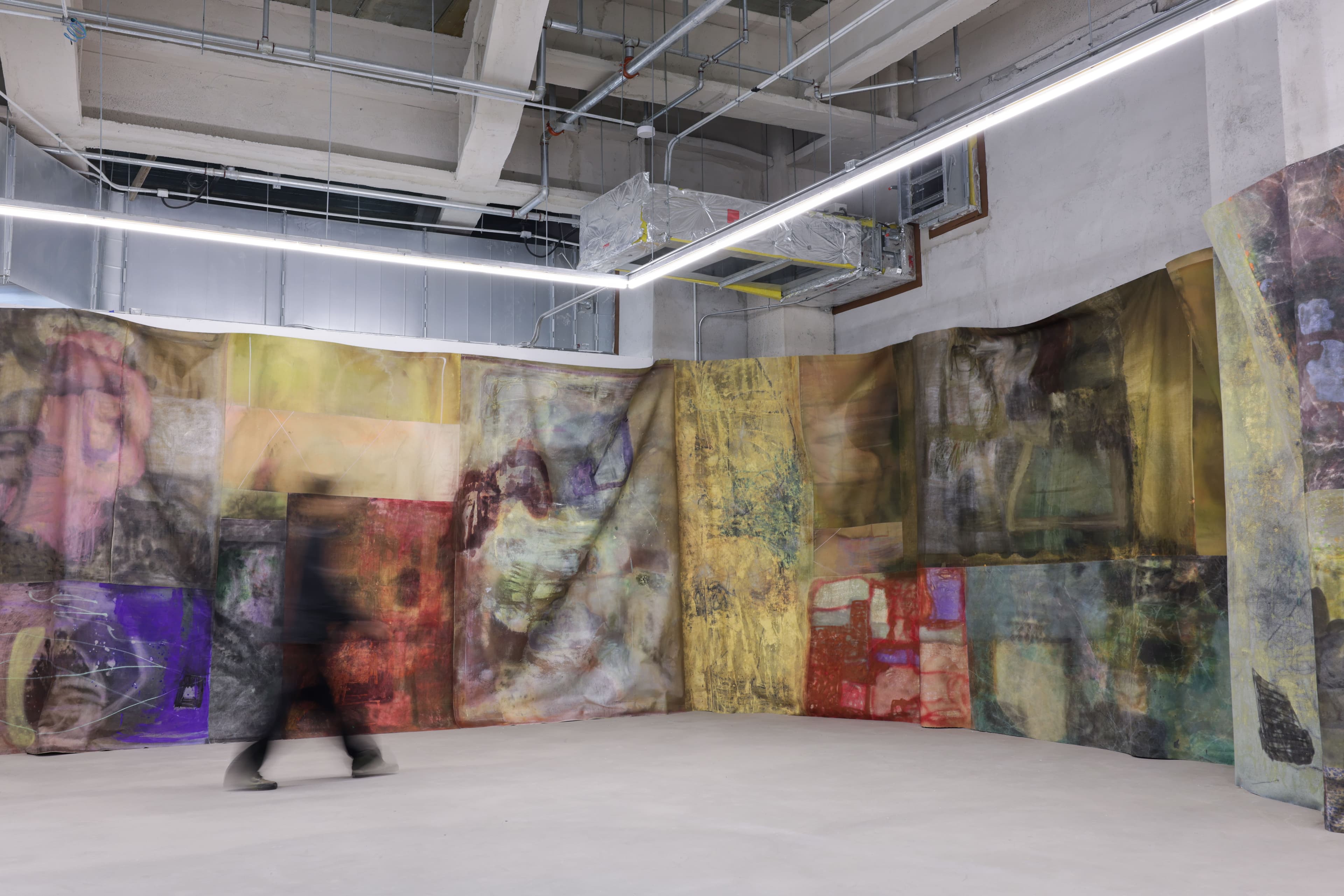
On 13 November 2025, Hol (洞) will present ‘The Weathered One’, a solo exhibition by artist Yang Yang. The exhibition will feature a 33-metre-long painting, which took two years to complete and is being shown in its entirety for the first time.
Yang Yang was born in Dunhuang, a city situated at the crossroads of Central and East Asia that has witnessed the succession of dynasties and the migration of civilisations over the course of more than a millennium. The Dunhuang murals have endured in the arid climate; weathering, flaking, restoration and overpainting collectively constitute their enduring life. From this, Yang Yang realised that images survive precisely because they are constantly being rewritten. Weathering is no longer destruction, but rather a means by which images continue to exist.
‘In my view, such paintings are imbued with a depth of time and reflection, enabling them to endure in a contemporary society characterised by shifting media. I hope the composition achieves an effect of intermingled multiple temporal and spatial dimensions; in my conception, history and the virtual constructs of time—both superficial and unconscious—merge with the geographical landscape, which may explain the “mysterious”, dreamlike quality of the work.’
— Yang Yang
In today’s world, fragmentation and disorder have become universal experiences: the instability brought about by the rapid advancement of new technologies, the ongoing collapse of ecosystems, and the frequent realignment of geopolitical landscapes. At this juncture, ‘weathering’ has become a defining theme of our era: the structures underpinning the world are crumbling and shifting, and people must seek ways to coexist. ‘The Weathered One’ focuses precisely on this tension, how images resist obliteration, and how humanity connects with one another amidst change.
'At the same time, I seek a state that is both stable and unstable: through repeated material research, I have discovered that effects which appear fragile and ephemeral are, in fact, enduring. I also wish to assert that painting still requires the traces of the hand; it ought to be tactile, primal and undetermined by design.'
— Yang Yang
'The Weathered One' transforms weathering into a method of painting. As the surface is scraped, sealed or covered, the old traces beneath resurface. Pigment and time interact, causing revelation and concealment to alternate. The work does not cease upon completion, but is placed within an ongoing process of growth. The image does not end with damage; it re-emerges precisely where it has been damaged. Within the works, imperfection is a prerequisite for viewing; fragments form new relationships. Wholeness is actively relinquished. Instead, an open image is presented, one in which diversity and difference coexist: not a unified whole, but a community exposed to the passage of time. The image does not gradually fade away, but constantly adjusts its own visibility.
As abstract painting, 'The Weathered One' proposes a contemporary stance. Abstraction does not merely seek renewal within its formal language; it must endure the wear and tear of reality, allowing time, environment and ideology to enter the logic of the work. The material is directly exposed to the forces of the world, enabling erosion and change to leave authentic traces upon the image. Painting thus ceases to be merely an extension of a self-sufficient system and becomes a field that bears the impact of reality, allowing abstraction to reconnect with contemporary experience: not ‘how to paint’, but ‘how the image continues to exist’.
'The Weathered One' explores how an image maintains its dynamism amidst external wear and tear. The works examine the mechanisms by which materials coexist with time and the environment, treating weathering as a condition for renewal. The image does not gradually disappear, but rather continually readjusts its visibility. Yang Yang incorporates these forces into her practice, confronting the viewer with a reality that is tenaciously in flux. The works further pose the question: when visibility is no longer stable, how does the visual experience continue?
Translated with DeepL.com (free version)